HEAVY LIFT & PROJECT CARGO
How we built a dedicated heavy-lift fleet and delivered a multi-vessel module offload across Oman
Duqm to Ibri, Sultanate of Oman
CASE STUDY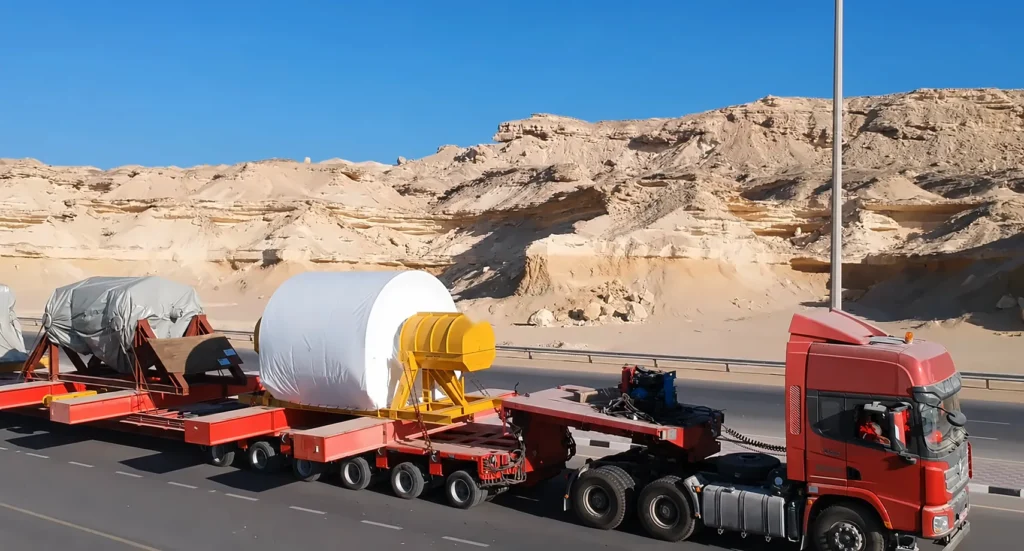
PROJECT OVERVIEW
Compass Logistics International, through its dedicated heavy-lift alliance, built a purpose-fit trailer fleet from the ground up and managed the offloading, port-to-yard transfer, and long-haul inland delivery of heavy industrial modules from Duqm Port to a project site in Ibri, roughly 670 kilometers inland.
THE CHALLENGE
A fleet that didn't exist yet, and a delivery route that hadn't been run before
Modules averaging 350 CBM each
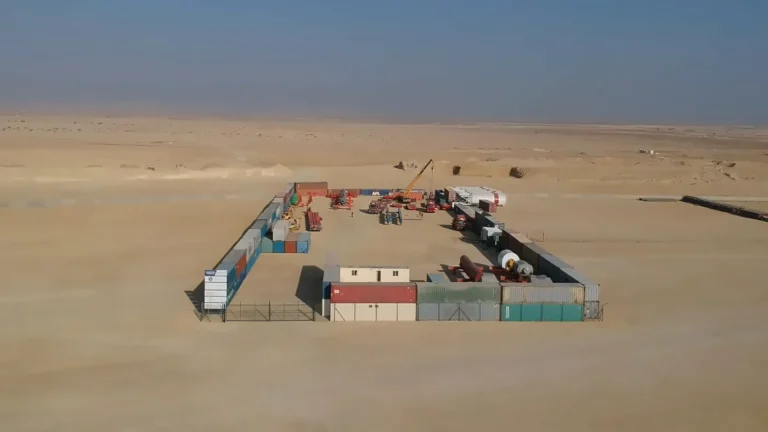
When the collaboration behind this project was finalized in November 2017, there was no fleet in place to handle it. Three vessels carrying heavy modules and general cargo were scheduled to arrive at Duqm Port within weeks of each other, and once offloaded, that cargo still had to travel roughly 670 kilometers inland to a project site in Ibri, much of it through terrain and jurisdictions with no established heavy-transport route.
The cargo itself left no margin for improvisation. Modules averaging 350 CBM each, alongside multi-tonne drums and general cargo, needed specialist trailers matched to each unit’s exact weight and axle configuration, not generic equipment adapted after the fact.
THE SOLUTION
Building the fleet before the first vessel arrived
Starting from zero in November 2017, the team sourced and assembled a dedicated modular trailer fleet in stages, timed against each incoming shipment.
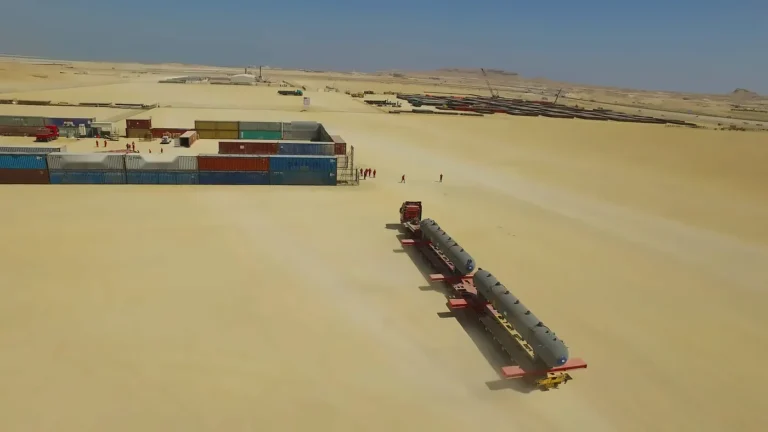
Fleet mobilization
The first modular trailers arrived from overseas in November 2017, followed by additional batches through January and February 2018. By the time offloading began, the fleet had grown to 21 modular trailers, in 3-axle, 4-axle, and 6-axle configurations, plus 5 dedicated truck heads.
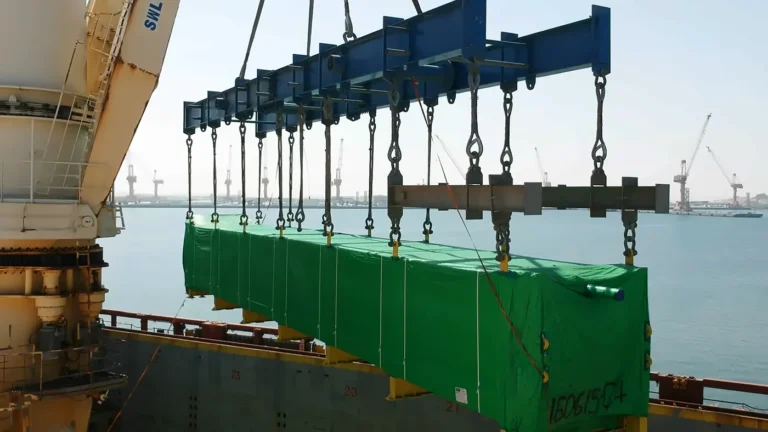
Vessel offloading
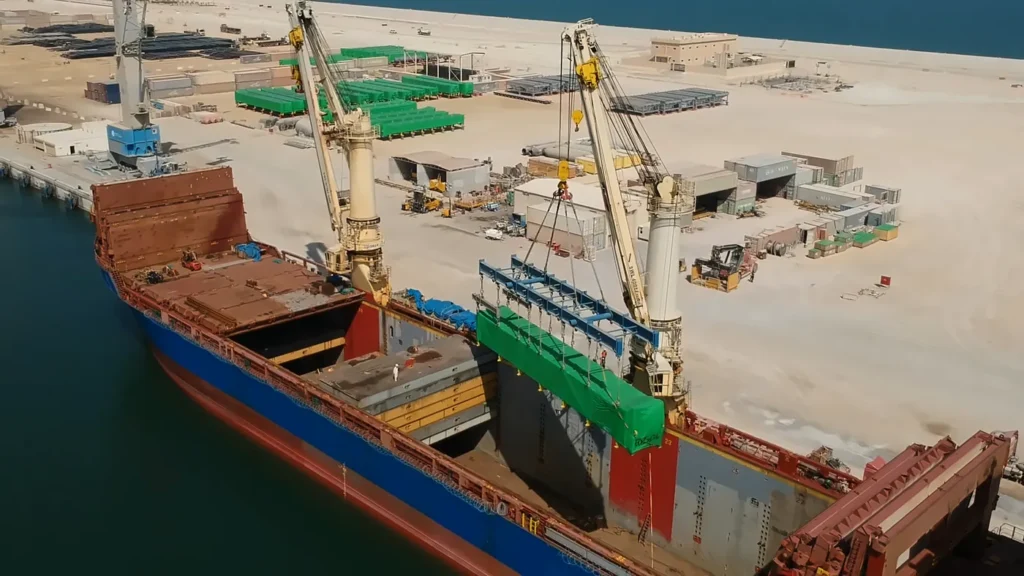
Three vessels were offloaded in sequence at Duqm Port over several weeks, using a dedicated spreader system for the heavy modules. Combined, the three vessels carried close to 12,000 CBM of cargo, including over 30 heavy modules, module cases, high-tonnage drums, and general cargo.
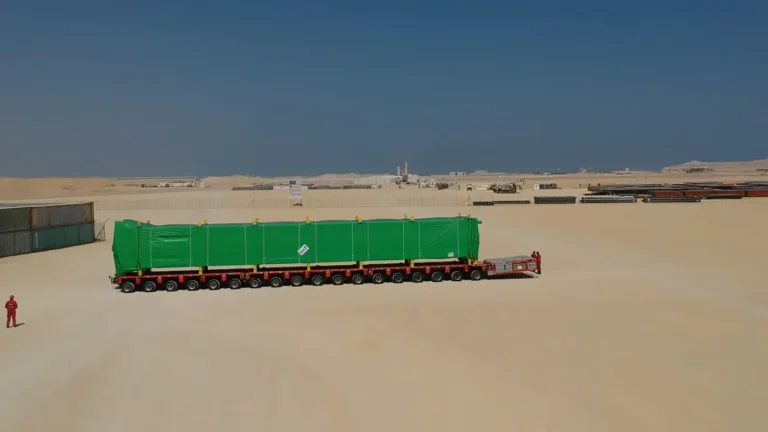
Port-to-yard transfer
Using self-propelled modular transporters (SPMT), all offloaded cargo was moved 5 kilometers from the port to a staging yard, completed within three weeks of the first vessel's arrival.
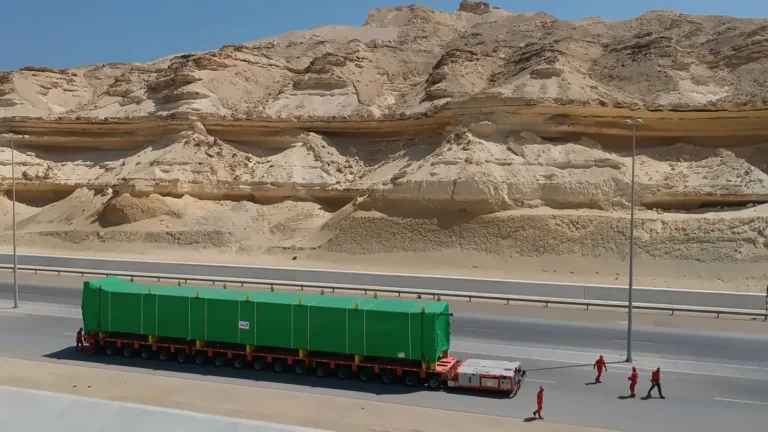
Long-haul inland delivery
From the Duqm yard, cargo was moved by batch convoy to the Ibri project site, 670 kilometers away. The heaviest single piece, a 310-tonne generator, traveled on a 12-plus-half-axle hydraulic trailer assembly, escorted in stages by regional traffic authorities across a multi-day route. A second, lighter convoy running the same route days later cut delivery time by more than half, as the route and process were now proven.
RESULTS
From zero fleet to full delivery in under five months
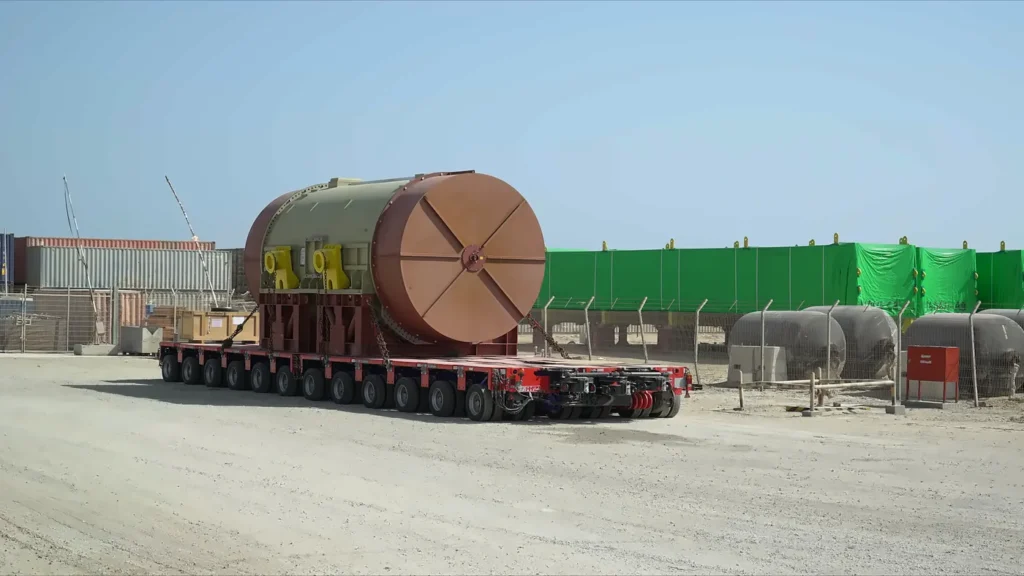
Completed between the Duqm yard and the Ibri site, with the full transportation program finished by mid-April 2018, roughly five months after the collaboration began.
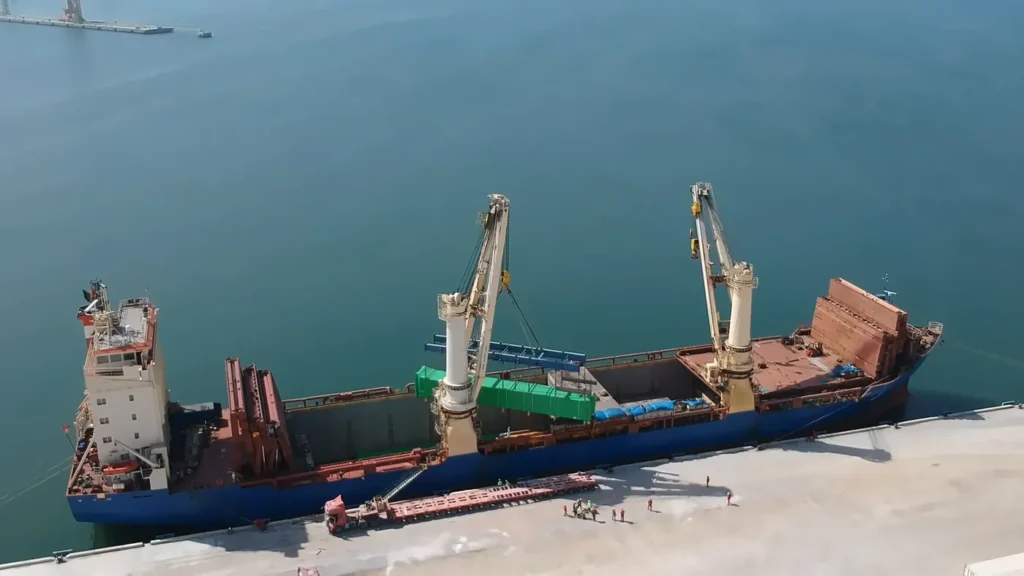
The first inland convoy took 4 days to reach Ibri, with regional escort handoffs across five separate zones along the route. The second convoy, running a similar distance, completed the same journey in 2 days, a direct result of the route and process established on the first run.
OUTCOMES
What the project proved
- 01
A dedicated fleet built and mobilized from scratch inside three months.
21 modular trailers and 5 truck heads sourced, delivered, and operational ahead of the first vessel's arrival.
- 02
Three vessels offloaded without disrupting the delivery schedule.
Close to 12,000 CBM of heavy modules and general cargo unloaded and staged in sequence.
- 03
A 670-kilometer inland route planned and proven.
Multi-day convoy movements coordinated across several jurisdictions, with regional escort handoffs managed at each stage.
- 04
Delivery times cut by more than half on repeat runs.
Process and route improvements from the first convoy directly reduced transit time on subsequent trips.