FACTORY RELOCATION
How we moved an entire beverage and can factory across three continents
A leading beverage and can manufacturer | Jeddah, Kingdom of Saudi Arabia
CASE STUDY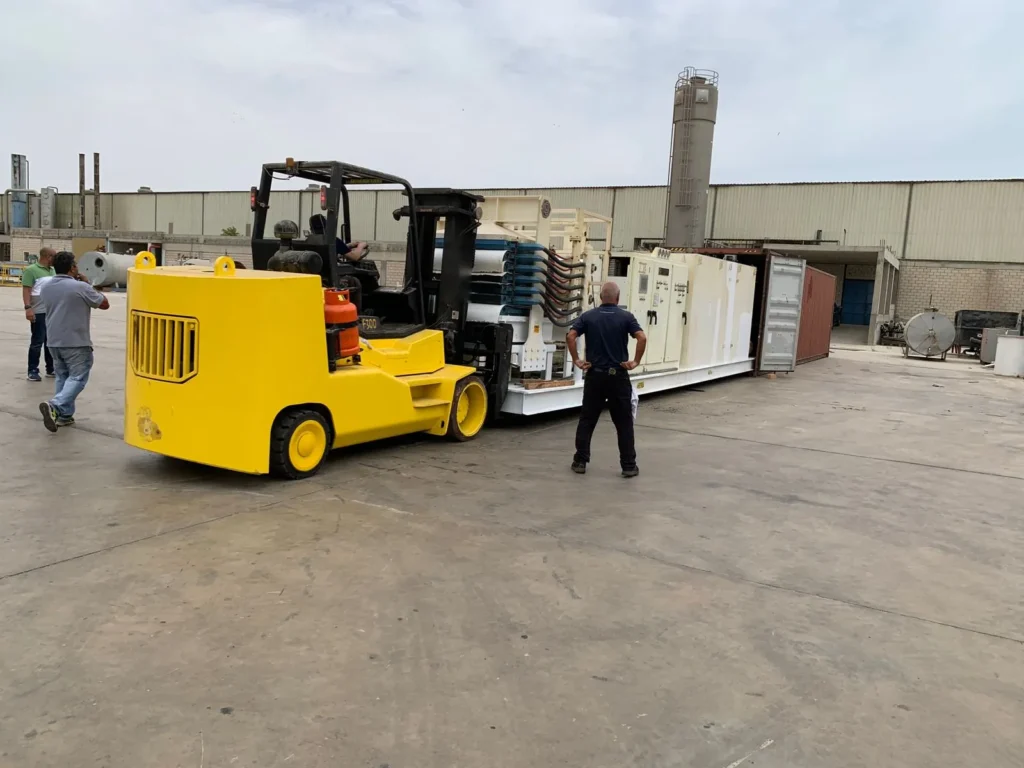
PROJECT OVERVIEW
Compass Logistics International managed the complete dismantling, packing, and international shipment of a large-scale beverage and can manufacturing facility, moving equipment from Jeddah to the United States and Malaysia within a four-month window.
THE CHALLENGE
A factory built over decades, moved in four months
Saudi export rules, U.S. customs, and Malaysian port protocols, all at once
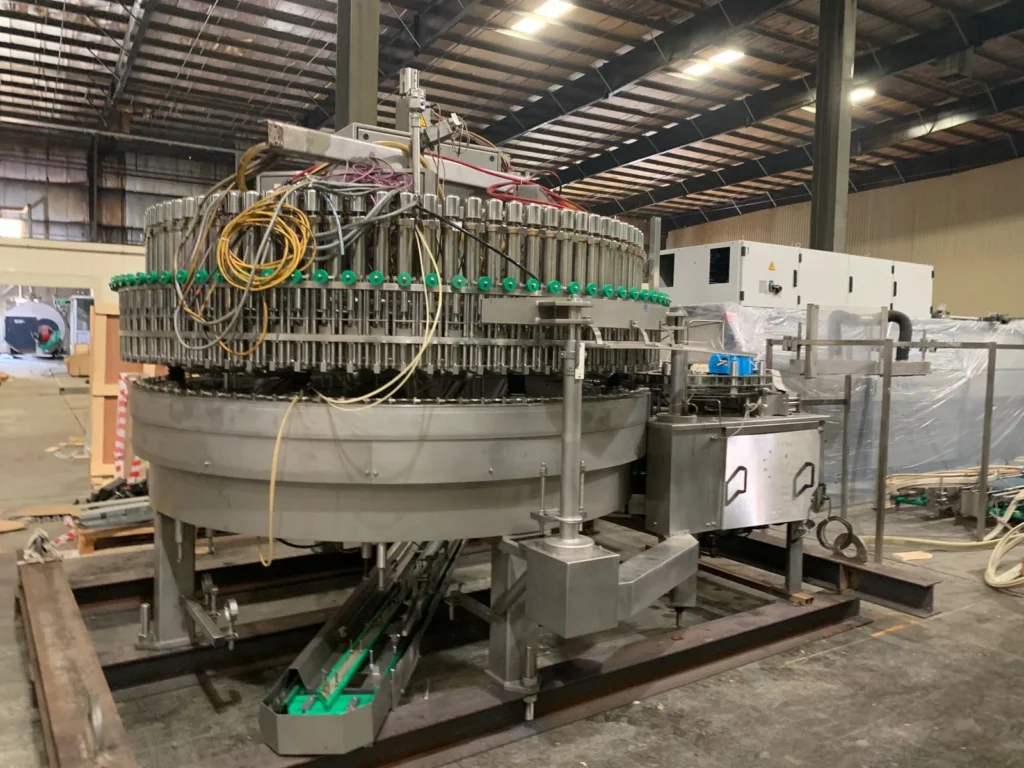
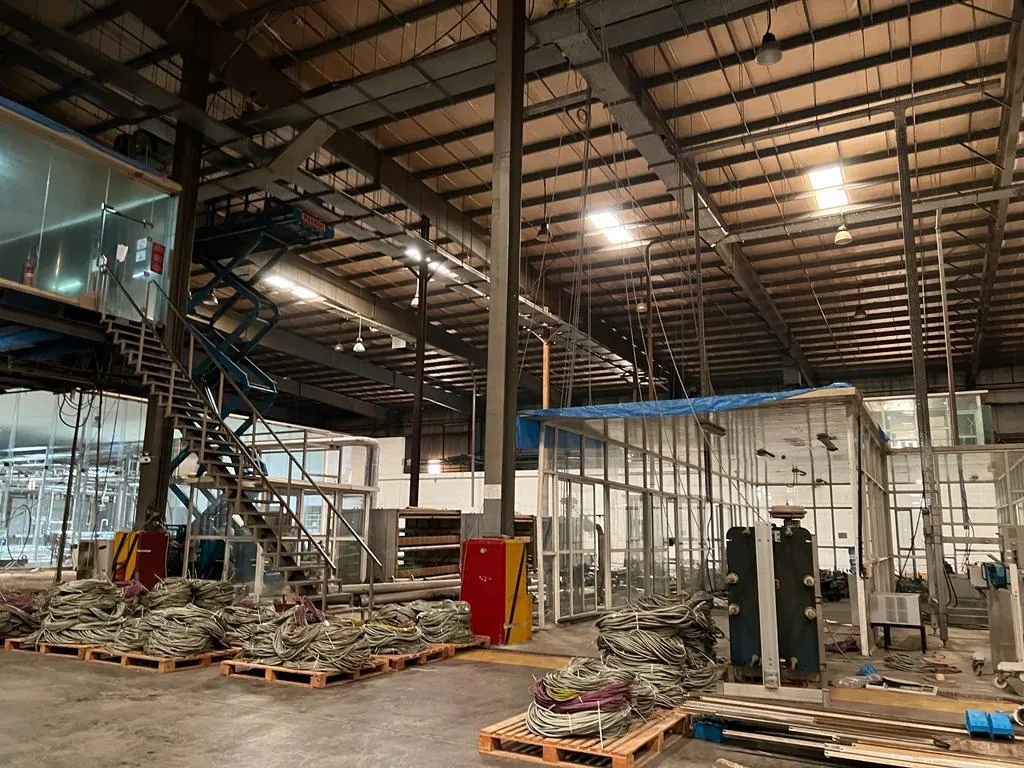
The client ran three interdependent production systems: a Can Line, an End Line, and a Filling Line, producing aluminium cans for the regional market. When the company restructured and exited its Jeddah facility in 2022, the equipment was too valuable to scrap. The plan was to relocate the Can Line to a buyer in the United States, and the End and Filling Lines to Malaysia, simultaneously.
Production machinery isn’t ordinary freight. It’s bolted to foundations, plumbed into utility systems, and calibrated to precise tolerances. Disassemble it wrong, and it stops working. Pack it wrong, and it’s damaged before it reaches port. This project meant satisfying Saudi export rules, U.S. customs, and Malaysian port protocols, all at once, for two separate shipments, on one timeline.
THE SOLUTION
Four phases, no room for error
Each phase had to meet a defined standard before the next could begin. A mistake as small as leftover moisture before sealing a container can cause irreversible damage by the time a vessel arrives.
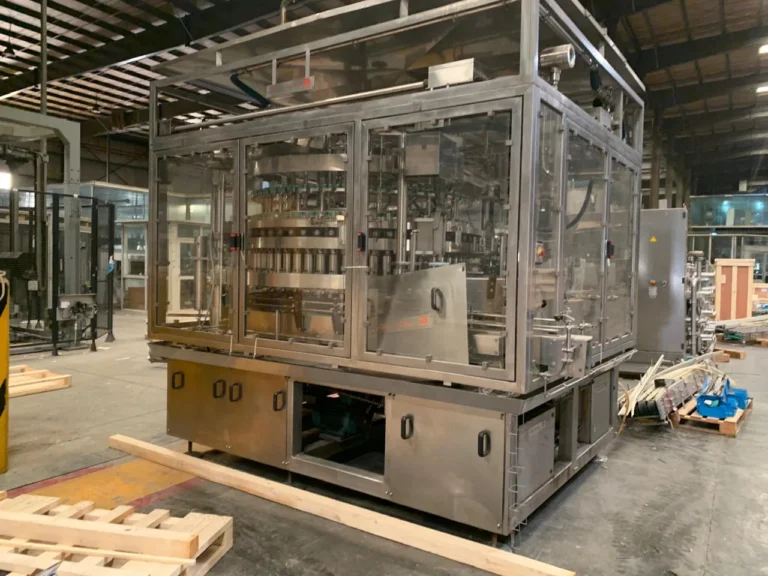
Site Survey
Every unit catalogued for dimensions, weight, and center of gravity before any work begins.
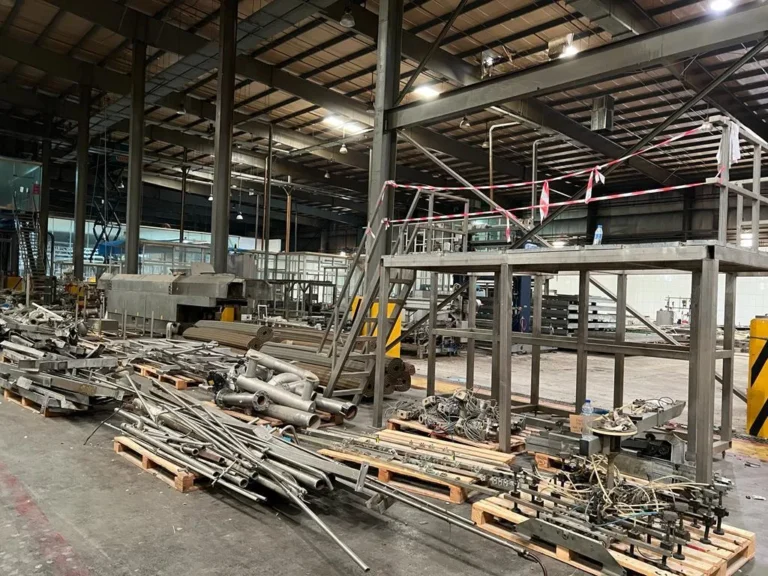
Cleaning
Food-safety protocol: debris removal, warm-water rinse under 120°F, full air drying.
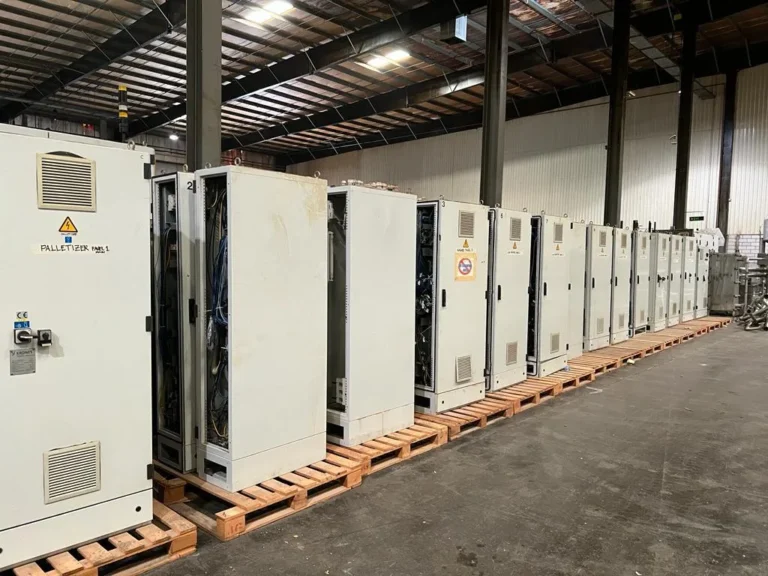
Packing
Custom boxes, pallets, and skids, built on site to each unit's exact specifications.
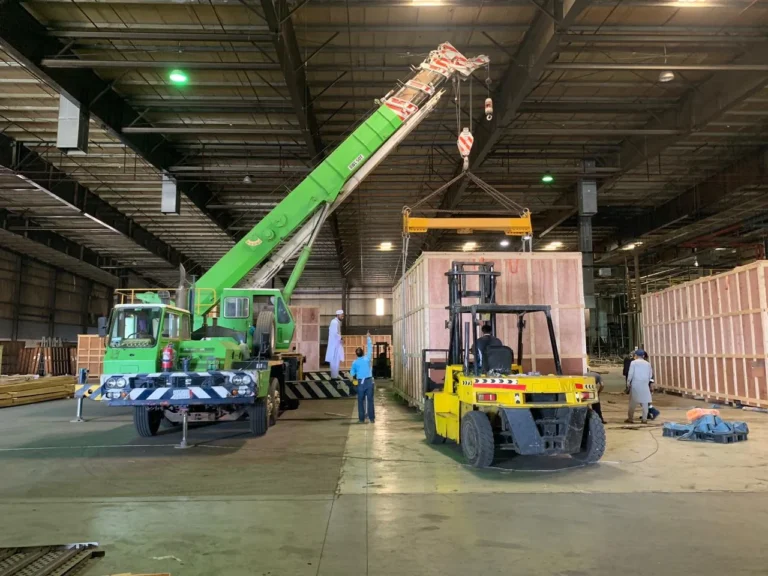
Loading & Shipping
Container inspection, heat-treatment stamping, lashing, silica gel, port dispatch.
Nothing was pre-made. Five to six dedicated carpenter teams, around 40 workers, built every box, pallet, and skid on site to match the exact dimensions and weight distribution of the unit it would carry. Out-of-gauge units traveled on custom skids; sensitive components were vacuum-wrapped in foil to block moisture.
ON THE GROUND
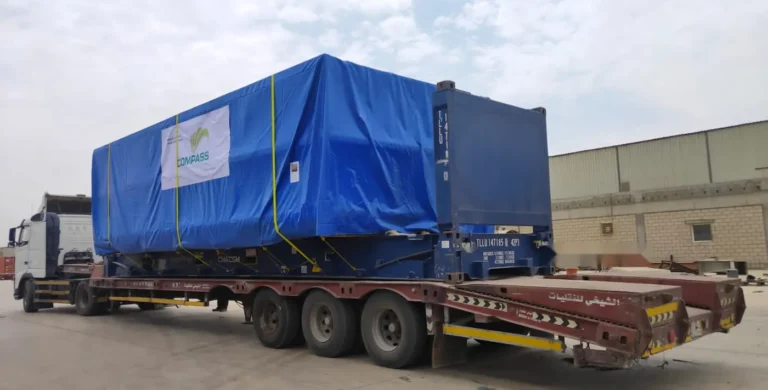
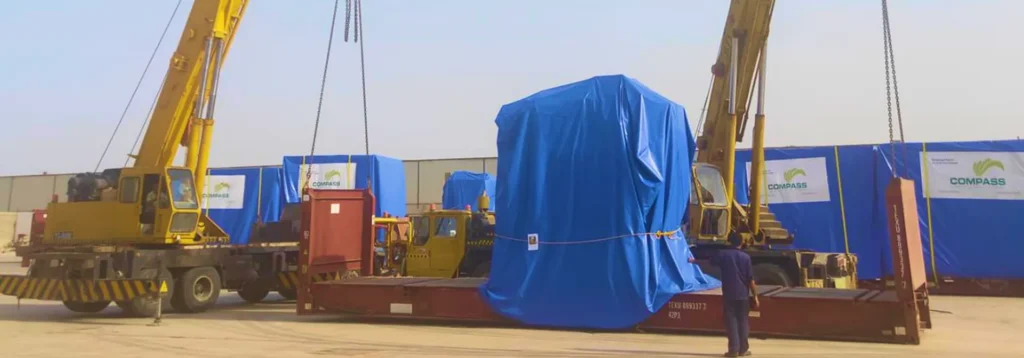
The on-site fleet
RESULTS
199 containers, two oceans, one schedule
The Can Line, the larger shipment, accounted for 71% of total volume (5,190 CBM), bound for New York.
The End and Filling Lines made up the remaining 29% (2,100 CBM), bound for Port Klang.
Work ramped through June, hit peak intensity in July as Can Line packing ran full capacity, then tapered as final shipments departed for both destinations.
OUTCOMES
Delivered on time, across two oceans
- 01
Single-partner accountability across every phase
One team from site survey to final vessel dispatch, no third-party forwarder needed.
- 02
All packing engineered on site
Every box, pallet, and skid custom-built to exact dimensions and center of gravity.
- 03
Simultaneous dual-destination export, zero delay
Separate documentation, port clearances, and vessel bookings managed in parallel across 53 booking references.
- 04
Out-of-gauge units moved without incident
Dual-crane lifts, lowbed trailers, and specialist flat rack lashing for the heaviest machines.
- 05
Food-industry cleaning standards met before departure
Protecting both the machinery and the client's compliance at destination.